

On February 1, 1960, Ezell Blair Jr., David Richmond, Franklin McCain and Joseph McNeil sat down at the Whites Only lunch counter of the Woolworth in downtown Greensboro, North Carolina, and asked to be served. They were declined and asked to leave. They politely declined. Police were called but they were not arrested.
Why? Before sitting down, they had visited the retail side of the business and each purchased items for which they had receipts. Those receipts did not entitle them to be served but they did entitle them to remain in the store for the final hour before closing.
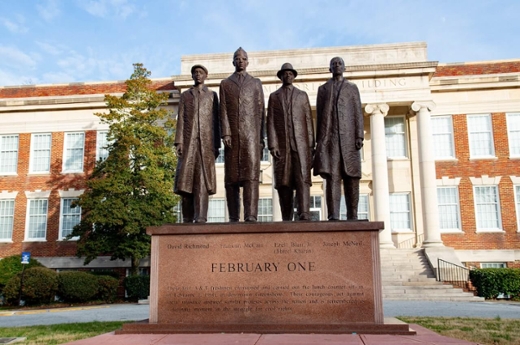
Neither their actions, nor their now famous picture, happened by chance. The four planned their actions down to the last detail.
- Befriending Ralph Johns, a white business man was a supporter of the NAACP and the college they attended, weeks before they decided to act.
- Talking to each other for weeks about the different actions they could take to decide which one they would do.
- Learning the store’s policies so they knew what would allow them to stay in the store.
- Stopping at Johns’s store on their way to Woolworth to tell him what they were doing so he could contact local media.
“After leaving the store, the students told campus leaders at Agricultural and Technical what had happened. The next morning twenty-nine neatly dressed male and female North Carolina Agricultural and Technical students sat at the Woolworth’s lunch counter.”1
Daily, students returned to sit at the lunch counter and “on February 4, more than 300 students participated in the sit-in, which expanded to nearby businesses.”2
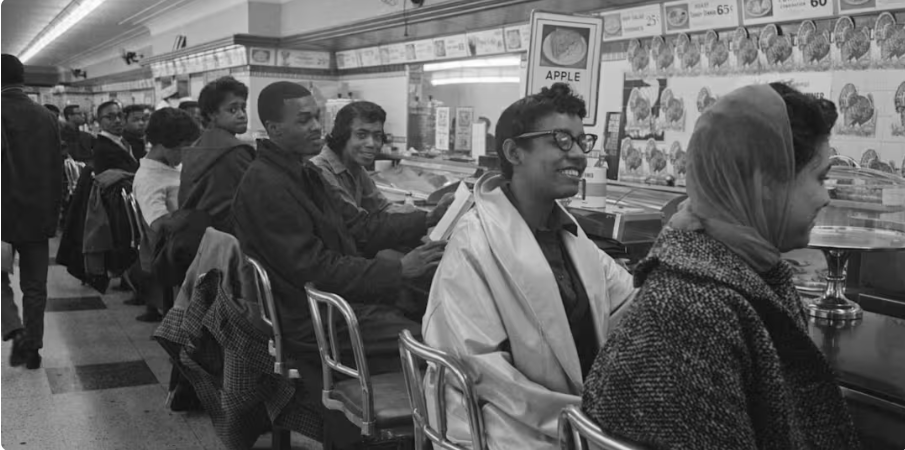
With growth and attention came white counter-protesters carrying Confederate flags and shouting horrible things at those who were sitting-in. ” “On Feb. 6, a bomb threat was called into the store and everyone was evacuated. While the rest of the store reopened a couple of days later, the lunch counter remained closed for several weeks.”3
“The Greensboro sit-ins inspired mass movement across the South. By April 1960, 70 southern cities had sit-ins of their own. Direct-action sit-ins made public what Jim Crow wanted to hide–Black resistance to segregation.”4
The Greensboro Lunch Counter Sit-in ended on July 25, 1960, nearly six months after it began.
WATCH A VIDEO ABOUT THE SIT-IN
THE MAN BEHIND THE COUNTER
Standing behind the counter in this famous photo is Charles Bess, who was working as a busboy for the counter at which he was not allowed to sit. Learn more about him.
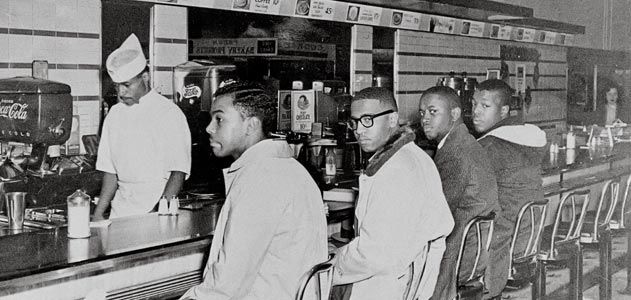
- https://bittersoutherner.com/southern-perspective/2020/charles-bess-greensboro-woolworth-sit-ins-civil-rights
- https://youtu.be/4kGQ8DAAEMU?si=ymCu0EwQ2iFgldl2
- https://youtu.be/bgraiYieAlc?si=1Ndx4I0z9Dn0p0Dm
Leave a Reply