

On September 4, 1957, nine Black students arrived at Central High School in Little Rock, Arkansas intending to integrate the school. Their names were Minnijean Brown, Terrance Roberts, Elizabeth Eckford, Ernest Green, Thelma Mothershed, Melba Patillo, Gloria Ray, Jefferson Thomas, and Carlotta Walls. After making their way through an angry white, they were greeted at the schoolhouse doors by the Arkansas National Guard and were forced to go home. The students returned on September 29th and this time, protected by federal troops, were able to enter the school. The students became known as “The Little Rock Nine.”
Although their story is definitely one worth telling, today we want to tell you about the woman behind them and her role in the move to integrate the school — Daisy Gatson Bates.
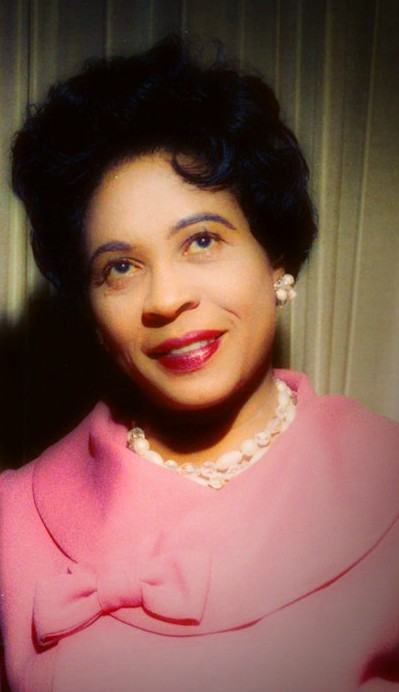
She was born November 11, 1914, in Huttig, Arkansas to Hezekiah and Millie Gatson. But her time with her parents was cut short when her mother was raped and murdered by three white men when Daisy was just 3 years old. Fearing that law enforcement would make him the scapegoat for his wife’s death, Hezekiah left his daughter with family friends, Orlee and Susie Smith, and disappeared. Mrs. Gatson’s attackers were never brought to justice, and Daisy never saw her father again.
When the Smiths felt Daisy was old enough to understand, they told her about the tragedy. It is not surprising the young Daisy became consumed by hatred of white people. But words from her adoptive father on his deathbed helped refocus and shape her life:
“Hate can destroy you, Daisy. Don’t hate white people just because they’re white. If you hate, make it count for something. Hate the humiliations we are living under in the South. Hate the discrimination that eats away at the South. Hate the discrimination that eats away at the soul of every black man and woman. Hate the insults hurled at us by white scum—and then try to do something about it, or your hate won’t spell a thing.”1
She met Lucious Christopher “L.C.” Bates, the man who would become her husband when she was fifteen. Together, they moved to Little Rock, Arkansas where they started their own newspaper, The Arkansas Weekly (later known as the Arkansas State Press). The state-wide paper’s style and content were inspired by the Chicago Defender and the NAACP’s magazine, The Crisis. But those were northern and national publications. In Arkansas, in fact anywhere in the South at that time, the paper’s Black ownership, its pro-civil rights stance, and its featuring of Black excellence and achievement were rare. ” It would be not until after the civil rights movement in the 1960s that newspapers owned by whites would begin to show African Americans in a positive light.”2
This is the front page of the November 14,1958 issue of the Arkansas State Press. You can see the entire issue online at the Library of Congress by clicking here. Other issues of the paper are also available at the Library of Congress website.

Beyond her work at the paper, she was involved with many local civil rights organizations, including the NAACP where she served as the state chapter president for many years. So, when the national organization began to look at Arkansas’s white schools’ refusal to integrate, they called on her to plan the strategy.

Daisy was the one to pick the nine students who would become the Little Rock Nine. She was the one who worked with them for weeks before their first attempt to integrate, providing counseling sessions and lessons on how to respond to the intimidation tactics they were sure to face. When it came time to attempt to integrate Central High School, it was Daisy who drove them to school every day and worked to keep them safe from the violence that surrounded the efforts to integrate.
As noted earlier, Central High School was finally integrated on September 29, 1957. But that didn’t mean the Nine or Mrs. Bates were safe. The Arkansas National Guard troops continued to patrol the school throughout that school year and when incidents occurred, Mrs. Bates never let a student, or their parents attend a meeting with school officials without her.
Their role in the fight for integration made them a target of intimidation. Rocks were thrown at their home, and she received threats in the mail. “On October 31, 1957, the Little Rock city council arrested Mrs. Bates and other members of the Arkansas NAACP for failure to supply the city clerk’s office with information about the NAACP’s membership, contributors, and expenditures. At the trial in December of 1957, Mrs. Bates was convicted and fined $100, plus court costs.”3
In 1968, Daisy and her husband moved to Mitchellville, Arkansas, where she quickly began to organize the town’s residents who were mostly poor.
Daisy Gaston Bates died on November 4th, 1999 and was later awarded the Medal of Freedom. In 2024 a statue of her was added to the U.S. Capitol.
Footnotes
- BHM: Good Black News Celebrates Daisy Bates, Civil Rights Activist, Newspaper Publisher, Little Rock Nine Organizer – Good Black News ↩︎
- Arkansas State Press – Encyclopedia of Arkansas ↩︎
- BLACK WOMEN IN AMERICA: DAISY LEE GATSON BATES | BEAUTIFUL, ALSO, ARE THE SOULS OF MY BLACK SISTERS ↩︎
Additional Resources
- Daisy Bates | National Women’s History Museum
- Timeline of the Little Rock School Integration
- Daisy Bates Stood Up To School Segregation And Won – Essence | Essence
- The Long Shadow of Little Rock a book by Daisy Bates, Eleanor Roosevelt, and Director Clayborne Carson – Bookshop.org US

Little Rock Nine
By: Marshall Poe (author), Ellen Lindner (illustrator)
Reader age: 8 – 12 years; Grade Level 3 – 7
Leave a Reply