
Decades before Colin Kaepernick kneeled or LeBron James was told to “shut up and dribble”, Tommy Smith and John Carlos raised their black gloved fists skywards at the 1968 Olympic Games in Mexico City, Mexico.

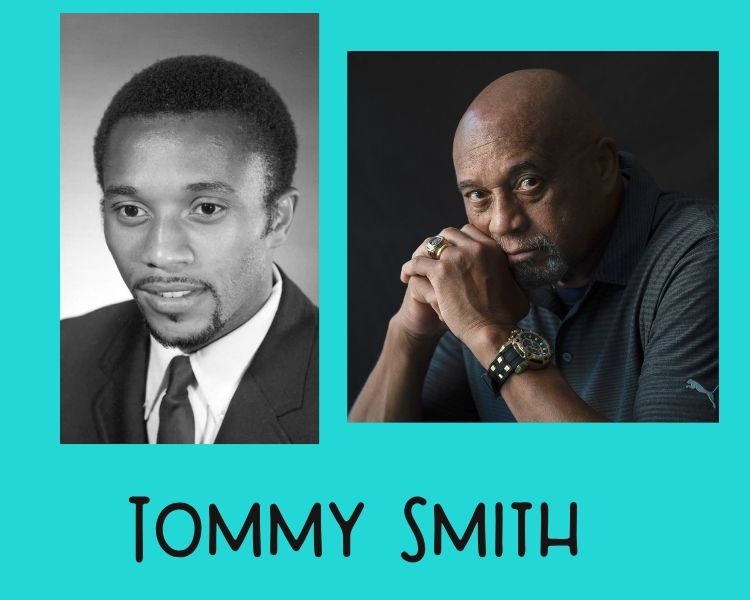
Smith and Carlos, two Black athletes on the 1968 U.S. Track and Field Olympic team, placed 1st and 3rd in the 200-meter dash. A few hours later, as the U.S. National Anthem began, both men put on a black glove, bowed their heads and raised their fists. They did so without wearing shoes. Their effort to draw attention to poverty in the US.
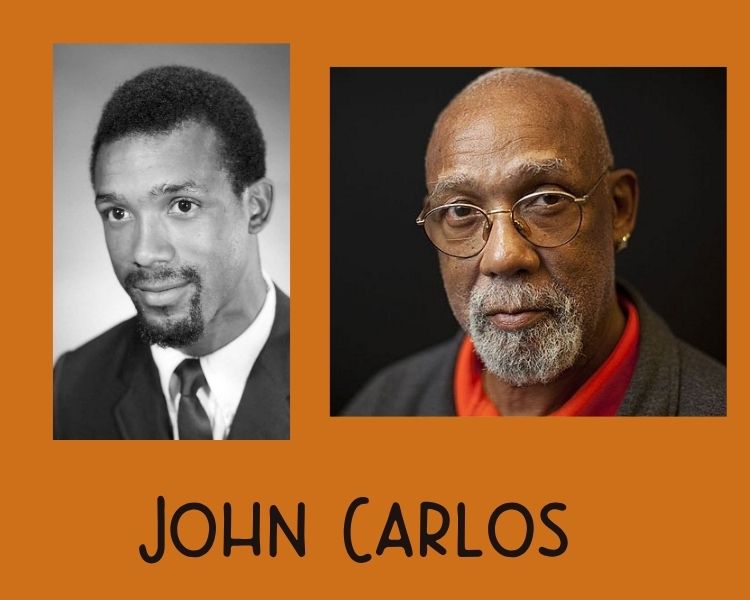
Accounts also fail to mention this moment hadn’t happened in a vacuum. Both men had been part of the Olympic Project for Human Rights (OPHR), an organization formed by amateur Black athletes with a goal of an African American boycott of the 1968 Olympic Games. When the boycott failed to draw enough participants, members of the OPHR planned their own individual protests.
The 3rd man on the platform was Peter Norman, an Australian athlete who placed second in the race. He had learned what Smith and Carlos had planned to do if either one of them one a medal. He wanted to stand in solidarity and so he borrowed an Olympic Project for Human Rights (OPHR) patch from a member of the US Rowing Team. He placed the patch onto his chest to as he took his place on the medal stand.

Their acts did not go without consequence. “Within hours, the IOC planted a rumor that Smith and Carlos had been stripped of their medals (although this was not in fact true) and expelled from the Olympic Village. Brundage wanted to send a message to every athlete that there would be punishment for any political demonstrations on the field of play.”1 They were also criticized in many US newspapers.
“Peter Norman, too, paid a heavy price. In Australia, newspapers accused him of “tarnishing the country’s image.” Despite his exceptional national record, he was not selected for the 1972 Munich Olympic Games. The federation and the media ostracized him. For years, he lived away from the world of sport, in forced obscurity. Norman never renounced his choice. He continued to support civil rights, including those of Indigenous Australians.”2
Check out this interview with John Carlos to learn what went down both before they got to the Olympics and while they were there that led to them to their action on the podium.
Footnotes
Leave a Reply