“Emergent Justice isn’t giving up on disenfranchised youth. That’s why we’ve founded the Michigan Student Network for Pipeline Prevention.”
– Elisheva Johnson, Emergent Justice Founder and Director

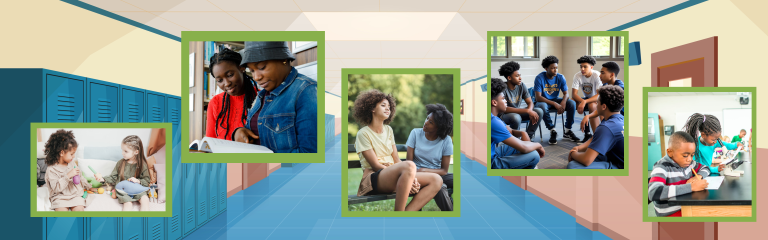
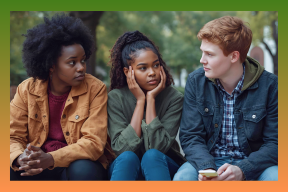
Instead of relying only on adults, the Michigan Student Network for Pipeline Prevention (MSNPP) is building a network where young people support each other-helping classmates stay in school, stay out of trouble, and on track for success.
Across ten Michigan counties, we’re launching a Peer-to-Peer Support Network pilot to address the roadblocks students face to staying in school and on track for future success. Students will get real support from their peers—mentorship, guidance, and a sense of belonging—so fewer young people end up in trouble and more stay on track in school and life. This is about real students helping real students, using what they know and what they’ve lived.
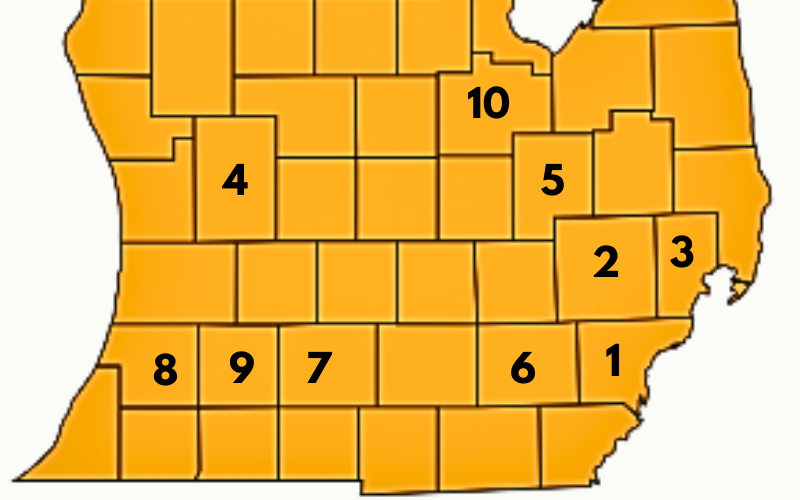
1 – Wayne, 2 – Oakland, 3 – Macomb, 4 – Kent,
5 – Genesee, 6 – Washtenaw, 7 – Calhoun, 8 – Van Buren, 9 – Kalamazoo, 10 – Saginaw

Why is the MSNPP needed?
Disenfranchised youth are being pushed out of the education system due to (1) the school to prison pipeline and (2) the serious mental health challenges that many youths face without access to the mental health resources they need.
1. The School-to-Prison Pipeline
The school-to-prison pipeline refers to a set of practices and policies that, often unintentionally, result in some students being pushed out of the classroom and onto a path toward involvement with the juvenile or criminal justice system. This happens when exclusionary discipline—like suspensions or expulsions—and a reliance on law enforcement in schools are used in situations that could often be addressed with guidance, support, and restorative approaches
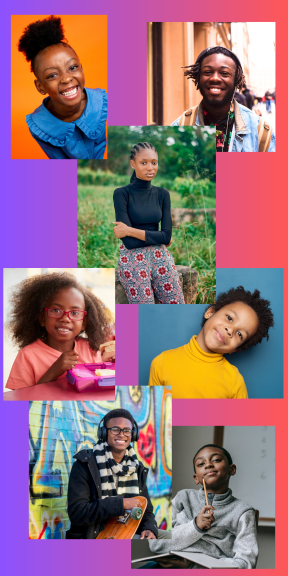
Black students in Michigan face:
Bureaucratic Neglect: Schools and systems often ignore our needs, or only pay attention when it’s time to punish. We are asking for Preventive methods instead of reactive methods.
Disrespect & Lack of Representation: Our voices, cultures, and histories are left out of the classroom and decision-making.
Trauma & Stress: Everyday racism, poverty, and violence wear us down, but we’re expected to just “push through.”
Isolation: We’re often the only Black kid in class, or one of a few, and that’s lonely.
2. Mental Health Challenges
Young people are facing serious mental health challenges and often feel isolated or misunderstood, especially those impacted by trauma, poverty, or systemic barriers. Traditional mental health services can be difficult to access or may not feel relatable, but peer support programs like MSNPP bridge that gap by connecting youth with trained peers who have lived through similar struggles and can offer real understanding, guidance, and hope.
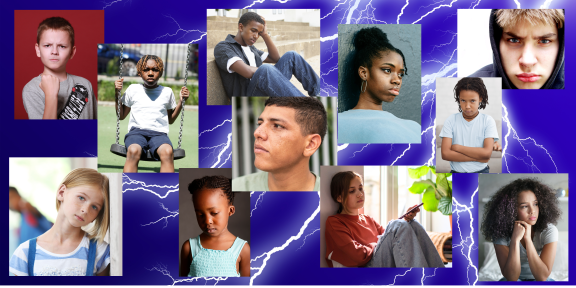
What does the Peer 2 Peer Team Do?
Mentorship & Listening: Trained student leaders offer one-on-one and group support, acting as mentors and friends for classmates facing challenges.
Conflict Resolution: Peers lead restorative circles to help classmates work through conflicts, repair harm, and build trust—keeping small issues from turning into big problems.
Skill-Building Workshops: Student teams run sessions on stress management, decision-making, and healthy relationships, making these skills real and relevant.
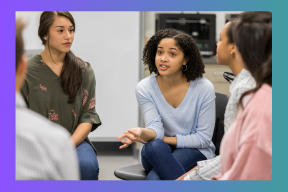
Support for Teachers: Peer leaders share insights with teachers about what’s really going on with students, helping build bridges and make classrooms more welcoming.
Community Connection: Peers organize events and forums, making sure student voices are heard by families, law enforcement, and community leaders.
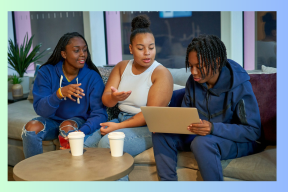
How It Works
Recruit & Train: We find and train student leaders who want to help their peers.
Launch Peer Teams: Each school gets a core group of peer supporters, and one team leads.
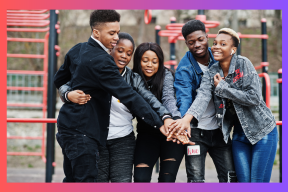
Regular Circles & Check-ins: Peers lead regular support circles, check-ins, and workshops.
Feedback Loops: Students share what’s working and what’s not, so the program stays fresh and effective.
Celebrate Success: We highlight positive changes and student achievements.

Why Peer 2 Peer Works
Students Trust Peers: Young people often listen more to classmates than adults.
Real-World Solutions: Peers know what’s really happening and can offer practical help.

Builds Community: Everyone feels part of something bigger, reducing isolation and risk.
Proven Results: Research shows peer mentoring leads to better grades, fewer discipline issues, and lower dropout rates.
Our Innovative Approach
Peer Leadership, Not Just Mentorship: Peer Advocates – Trained Black student advocates step in when classmates are being targeted by teachers or administrators. They know how to navigate the system and push back against unfair treatment.
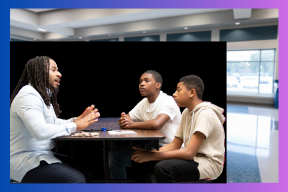
Restorative Justice, Our Way: Healing Circles: Led by Black students, these circles focus on our experiences—racism, trauma, family struggles, and more. They’re safe spaces to vent, heal, and plan non violent action.
Accountability, Not Punishment: When conflicts happen, Black peers help resolve them with understanding and respect, not suspension or arrest.

Bypassing the Bureaucracy: Direct Action Teams: Black student teams train to document and challenge unfair policies, suspensions, and arrests. They know their rights and how to organize.
Community Partnerships: Link up with Black-led organizations, churches, and activists who can back us up when the school won’t listen.
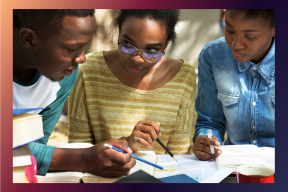
Mental Health, Our Way: Peer Counseling: Black students who have been trained in basic counseling skills by one of our mental health partners offer confidential support. They know what it’s like to be us.
The Bottom Line
“At the heart of our program is a belief in youth leadership. We train youth to serve as advocates and facilitators of restorative processes and turn to youth volunteers to inform and guide our evolving programming.”
We’re not just talking about change—we’re making it happen, peer by peer, school by school, across Michigan.