

Before Elvis, Little Richard or Chuck Berry there was Sister Rosetta Tharpe.
Born Rosetta Nubin in 1915 in Cotton Plant, Arkansas, Sister Rosetta picked up her first guitar at the age of four and at age six joined her mother in a traveling evangelist troupe where she both sang and played guitar.
In the 1920’s she and her mother settled in Chicago where they continued to perform gospel music. But Rosetta was developing her own sound — a mix of gospel and secular music, particularly Delta blues and New Orleans jazz. This fusion of musical genres was unusual. Almost as unusual as a female guitarist of any race.
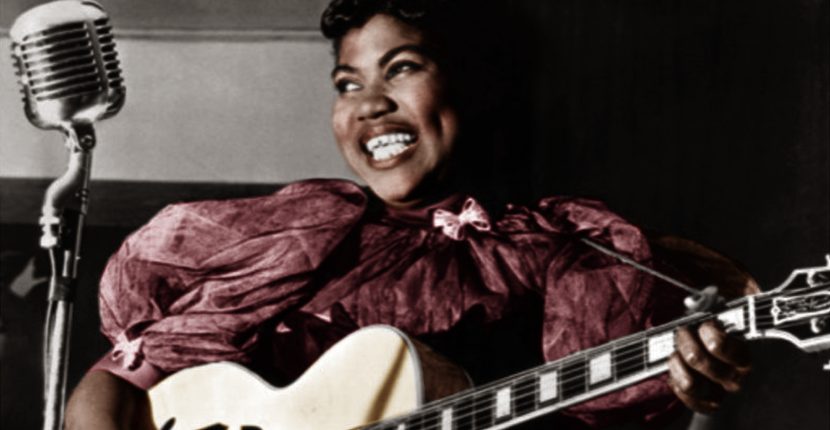
Many in the gospel community were alarmed by the high energy and bold nature of her performances, including lyrics that did not shy away from her openness of love and sexuality. But she didn’t let their concerns deter her. She continued to develop “her sound”, pioneering the use of a distorted guitar sound which she later combined with the techniques of bends and double-stops.
In 1938, she joined the Cotton Club Revue, a New York City club that became especially notable during the Prohibition era. Soon after she recorded her first single, “Rock Me” and continued to gain fans as she collaborated with Duck Ellington and other successful artists of the time. In 1941, she began travelling widely with the Lucky Millinder Orchestra, a notable swing band.

When compared to her male guitarist counterpoints of the time, she famously said “can’t no man play like me. I play better than a man.”1
Even as her fame grew, she continued to face discrimination and systemic racism. “When performing on tours to mixed race audiences in the 1940s, she would sometimes be refused entry to hotels and restaurants despite her growing fame.”2 “She challenged societal norms with her bold stage presence and unapologetic embrace of her identity, refusing to conform to expectations of how a woman, let alone a Black woman, should behave.”3
In 1964 she toured Europe with Muddy Waters. Musicians such as Eric Clapton, Jeff Beck, Keith Richards and Chuck Berry all include her among their musical influences. Check out her style and sound in this 1964 video from that tour.
She suffered health problems and died 10 years after this performance at the age of 58.
In 2023 Rolling Stone named her the sixth greatest guitarist of all time.4
Footnotes
- Sister Rosetta Tharpe: A Pioneer & Phenomenon | LickLibrary ↩︎
- IBID ↩︎
- Pioneering the Intersection of Gospel and Rock ‘n’ Roll ↩︎
- The 250 Greatest Guitarists of All Time ↩︎
Resources for Children
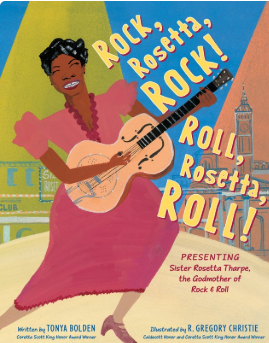
Reading age: 4 – 8 years
Check your library:
Title: Rock, Rosetta, Rock! Roll, Rosetta, Roll!
Author: Tonya Bolden

Reading age: 3 – 7 years
Check your library:
Title: Little Rosetta and the Talking Guitar
Author: Charnelle Pinkney Barlow
Leave a Reply