
“Due Process” has been in the news a lot over the past few months. But what does “due process” mean and why has it been in the news?
Both the 5th and 14th Amendments to the US Constitution include a “due process clause” – meaning a specific section – that “prohibits the government from taking any action that would deprive a person of “life, liberty, or property without due process of law.”1 This means that “when the federal government acts in a way that denies a citizen of a life, liberty, or property interest, the person must be given notice, the opportunity to be heard, and a decision by a neutral decision-maker.”2
Notice it says “person”, not “citizen.” That is what most of the current debate is about and that is why Yick Wo v. Hopkins is important.
Yick Wo v. Hopkins Case
In 1880 San Francisco passed a law requiring laundries housed in wooden buildings to get a yearly permit from saying their business could be safely run in the wooden building. The punishment for not getting the yearly permit was a misdemeanor with a fine and possible jail time. At the time there were 320 laundries in the city. 310 of them were in wooden buildings and 240 (77%) were owned by Chinese persons. While the city claimed the law was a matter of community safety, in reality it was aimed at closing Chinese-owned laundries. In fact, early drafts of the law stated it would only apply to Chinese-owned laundries in wooden buildings – wording removed from the final wording for fear it would be seen as unconstitutional.
In the beginning, some Chinese-owned laundries were able to get a permit, including Lee Yick, who had run his laundry in the same location since arriving in the US in 1861. In 1884 Mr. Yick’s laundry was certified to be safe and satisfactory by both the Board of Fire Wardens and the health department. But when he applied for his 1885 renewal, he was refused.
Mr. Yick continued to operate his laundry and in August he was arrested and jailed for refusing to pay a $10 fine. Meanwhile, another Chinese laundry owner, Wo Lee, experienced the same certification and permit denial and also continued to operate until he was arrested and jailed for not paying the fine.

Each sued and their combined case made it to the Supreme Court in 1886. Their attorneys argued that
“the fine and discriminatory enforcement of the ordinance violated their rights under the Equal Protection Clause of the Fourteenth Amendment.“3
On May 10, 1886, In a unanimous decision, the Supreme Court struck down the legislation aimed at closing Chinese-operated laundries in San Francisco and guaranteed non-citizens the Constitution’s protections.
Their ruling stated, the guarantees of the Fourteenth Amendment extend to “all persons within the territorial jurisdiction of the United States, without regard to differences of race, or color, or of nationality.”4
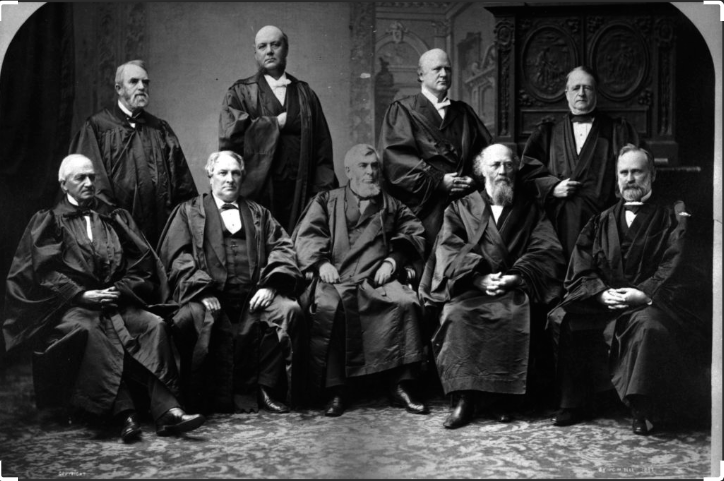
It was the first case to use the “equal protection” clause of the 14th Amendment, which prohibits states from denying any person within their jurisdiction the equal protection of the law.
Today
So, when you hear elected officials, legal experts and media arguing over whether or not undocumented immigrants have a right to due process, remember Lee Yick, Wo Lee and the words of the UNANIMOUS decision of the Supreme Court “all persons“.
Footnotes
- Due Process Defined and How It Works, With Examples and Types ↩︎
- ibid ↩︎
- May 10, 1886: Lee Yick Wins Equal Protection Under the Law Case – Zinn Education Project ↩︎
- Equal Justice Under Law: Yick Wo v. Hopkins – Annenberg Classroom ↩︎
Additional Resources
- Yick Wo: How A Racist Laundry Law In Early San Francisco Helped Civil
- C-SPAN Landmark Cases | Season Two – Home (includes an hour-long video of a C-SPAN discussion about the case)
Leave a Reply